Why Technical Manuals Need Professional Translation.
23 August, 2026· Artikel von Taylor Anderson

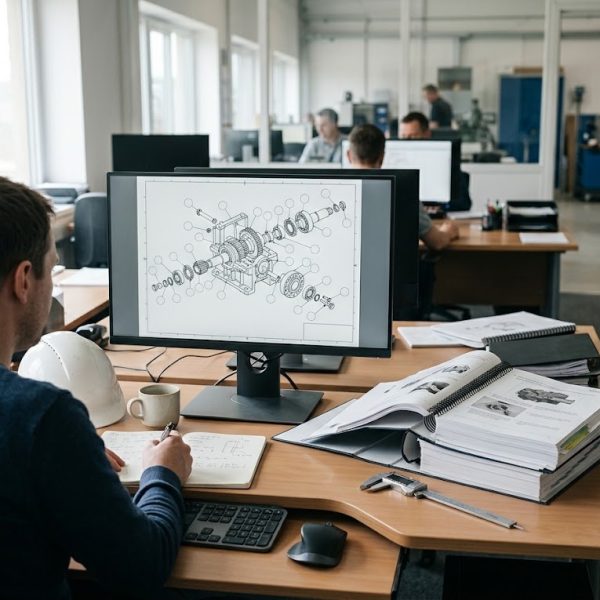
A German machinery exporter shipped a full container of industrial equipment to a distributor in Milan only to learn weeks later that half the printed manuals never left the warehouse because nobody had translated the safety appendix before the shipment deadline arrived.
Why Technical Documentation Gets Pushed To The Last Minute
Engineering teams spend months perfecting a product yet treat the accompanying manuals as an afterthought handled somewhere between final testing and the shipping date. This habit works fine for a domestic launch. It creates real risk the moment a product crosses into a market where regulators and end users expect documentation in their own language.
The pressure only grows once a company sells into several countries at once. A manual written once in German still needs careful adaptation before it can travel to distributors in Madrid Milan or Warsaw without losing the precision that made the original useful.
Choosing A Provider Built For Technical Content
Companies that export machinery software or medical devices need more than a generalist agency handling word for word conversion. They need reliable language translation services staffed by people who understand torque specifications wiring diagrams and the exact regulatory phrasing that inspectors expect to see on arrival.
A provider without this background can produce a manual that reads smoothly yet quietly changes a safety warning or a maintenance interval in ways that only become obvious after equipment fails in the field. That kind of mistake costs far more than the translation itself ever would have.
Why Italy Deserves Its Own Documentation Strategy
Manufacturers expanding distribution into Italy often assume a single English manual with a translated cover page will satisfy local requirements. Italian regulators and buyers expect complete native language documentation and treat a thin translation as a signal that the manufacturer has not fully committed to the market.
Firms serious about long term growth in the region increasingly commission dedicated italian translation services for every manual safety notice and warranty document rather than translating only the pages a distributor happens to request first.
What Separates Usable Documentation From A Liability
A technical manual succeeds when a technician unfamiliar with the original engineering team can follow it without guessing. Vague phrasing forces the reader to interpret intent rather than follow instruction and that gap becomes dangerous fast around moving parts or high voltage equipment.
Reviewers who understand both the source language and the target industry catch these gaps before publication. A reviewer without industry context tends to approve text that sounds fluent yet subtly misrepresents a procedure that matters far more than fluency alone.
Building A Terminology Base Before Scaling
Companies expanding documentation across five or six languages simultaneously benefit enormously from a shared glossary that locks down how every recurring term gets rendered in each target language before translation even begins.
Without this foundation two different translators can render the same safety term two different ways across two manuals for the same product line. Technicians who compare documents across markets notice the inconsistency immediately and it undermines confidence in the entire documentation set.
The Cost Of Getting Documentation Wrong
A poorly translated manual rarely fails during the sale itself. The failure surfaces later during installation maintenance or a warranty dispute when a technician cannot follow a step and calls the manufacturer directly for clarification that should have been in the manual from the start.
Every one of those calls costs the manufacturer support time and slowly damages trust with a distributor who expected a finished professional document rather than something requiring constant follow up just to keep equipment running safely.
Questions Worth Asking Before Choosing A Vendor
A few direct questions reveal more than an hour spent browsing a vendor website. Does the team include translators with real engineering or technical backgrounds. How does the vendor handle diagrams and embedded labels that live inside the source files themselves. What review process catches an error before publication rather than after a customer reports it.
Vendors who answer these questions with specific detail almost always have handled similar projects successfully before. Vendors who deflect toward generic marketing language rarely have the depth needed for complex technical content.
There is a formal version of that first question. ISO 17100 certification, which PoliLingua holds, requires translator competence to be documented through qualifications or professional experience rather than simply asserted. For a manual full of torque figures and maintenance intervals that record is the difference between a vendor claiming technical depth and a vendor able to show it. It does not guarantee an engineer on the file but it does put the claim on paper.
Keeping Documentation Current As Products Evolve
Technical documentation is never truly finished once a product ships. Firmware updates new safety regulations and design revisions all require corresponding updates across every translated version of the manual not just the original source document.
Technical manuals are read by someone holding a tool, which is the least forgiving reading environment there is. A sentence that requires a second pass is a safety issue rather than a style issue. Manufacturers shipping into Spain and Latin America generally retain a specialist spanish translator rather than rotating vendors.
Professional translation of technical manuals is often first questioned during an acquisition rather than during production. A buyer wants to know whether the documentation supporting a product line is defensible in every market it sells into. That question sits squarely inside due diligence and can materially affect a valuation.
Manufacturers who establish a clear update process from the beginning avoid the scramble that happens when a regulatory change forces a rushed revision across six languages simultaneously with almost no lead time to get it right.
Preparing Source Content For Smoother Translation
Engineering teams that write clear consistent source documentation from the start make every downstream translation faster and more accurate. Avoiding internal jargon and vague pronoun references gives translators far less room for misinterpretation before the text ever reaches a second language.
Companies that invest a little extra effort into the original English or German manual often find that this discipline pays for itself many times over once the same clean source content gets translated into four or five additional languages.
A Process That Scales With Global Growth
Manufacturers entering new export markets every year benefit from solving documentation workflow early rather than treating each new language as a separate emergency project handled under deadline pressure by whichever vendor happens to be available.
Building this discipline now costs far less than untangling inconsistent documentation years later once dozens of manuals across a dozen markets need to be reconciled with a single unified terminology standard.
Training Internal Teams To Support The Process
Even the best translation vendor struggles when internal teams treat every request as a rush job dropped on their desk without warning. Product managers who plan documentation timelines alongside product launches give translators the lead time needed to produce accurate work rather than a hurried approximation.
A short internal briefing on how translation actually works helps engineering teams understand why a rushed request often costs more and delivers less than a project planned several weeks ahead of the actual export deadline.
Measuring Documentation Quality Beyond A Quick Read
Many companies judge a translated manual only by whether it reads smoothly during a quick internal review. This approach misses the deeper question of whether a technician unfamiliar with the product could actually follow every step without confusion or hesitation.
Testing a sample of translated instructions with an actual technician in the target market before full publication catches gaps that a purely linguistic review often overlooks entirely. This extra step costs little compared to the support burden created by a manual that fails in the field.
Neueste Beiträge

Betriebsanleitung übersetzen:...

How AI Tools Keep Technical Do...

Perche I Manuali Tecnici Neces...

Por Que Los Manuales Tecnicos ...
Technische Dokumentation verla...

La documentation technique exi...
Teilen Sie es.
Wir verwenden Cookies
Wir verwenden Cookies, um Ihnen die beste Nutzung zu bieten, Ihre Einstellungen zu speichern und zu verstehen, wie die Website genutzt wird. Sie können alle Cookies akzeptieren, optionale ablehnen oder Kategorien einzeln wählen.
DatenschutzrichtlinieCookie-Einstellungen
Wählen Sie, welche Cookies wir verwenden dürfen. Notwendige Cookies bleiben aktiv, weil die Website ohne sie nicht funktioniert.
Weitere Informationen finden Sie in unserer Datenschutzrichtlinie.